Did you know that most casual anglers overlook the hull design that actually determines how steady your kayak sits in choppy water?
I’m here to walk you through the 2026 lineup of fishing kayaks that nail comfort, stability, and hands-free propulsion, so you can spend less time wrestling with your setup and more time landing fish.
Whether you’re eyeing pedal-driven models or modular rigs, there’s something here that’ll transform your time on the water.
Let me break down what matters most.
| Pelican Catch Mode 110 Kayak | Most Stable & Versatile | Weight Capacity: 375 lbs | Hull Material: Polyethylene (PE) | Rod Holders: 3 flush-mount rod holders | VIEW LATEST PRICE | Read My Analysis | |
| Pelican Catch Classic Angler | Best Value Pick | Weight Capacity: 350 lbs | Hull Material: High molecular weight polyethylene (HDPE) | Rod Holders: 2 flush-mount rod holders | VIEW LATEST PRICE | Read My Analysis | |
| Modular Fishing Kayak with Cart and Paddle | Most Portable Setup | Weight Capacity: 573 lbs | Hull Material: Low-Density Polyethylene (LDPE) | Rod Holders: 4 quick-release mounts (paddle holder, phone mount, fishing rod holder) | VIEW LATEST PRICE | Read My Analysis | |
| Albott Modular Fishing Kayak with Drive System | Best for Customization | Weight Capacity: 420 lbs | Hull Material: HDPE | Rod Holders: Customizable with modular upgrades | VIEW LATEST PRICE | Read My Analysis | |
| Pelican Catch HDII Premium Fishing Kayak with HyDryve Pedal | Premium Pedal System | Weight Capacity: 350 lbs | Hull Material: Polyethylene (PE) | Rod Holders: 3 flush-mount rod holders | VIEW LATEST PRICE | Read My Analysis |
More Details on Our Top Picks
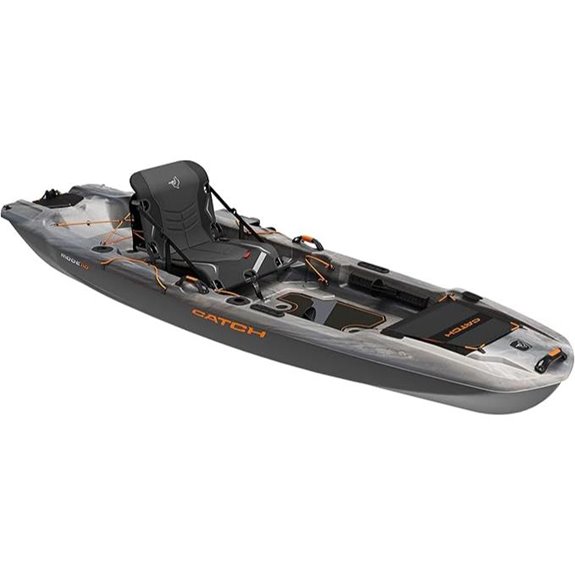
Pelican Catch Mode 110 Kayak
Looking for stability that won’t quit? The Pelican Catch Mode 110 delivers serious peace of mind with its tunnel hull design and wide, flat deck platform. You’ll stand confidently while casting and reeling, and the ERGOBOOST seating system keeps you comfortable with adjustable height and better viewing angles.
At 10 feet 8 inches long and weighing 63 pounds, this kayak handles like a dream on the water. The 375-pound weight capacity accommodates most anglers plus gear, while three rod holders, two rigging tracks, and front/rear tank wells keep your equipment organized. And with additional flotation meeting ABYC safety standards, you’re protected. The RAM-X material ensures durability for years of fishing adventures.
- Weight Capacity:375 lbs
- Hull Material:Polyethylene (PE)
- Rod Holders:3 flush-mount rod holders
- Length:10 ft 8 in (128 L)
- Weight:67 lbs
- Storage Compartments:Front and rear tank wells, under-seat storage, storage platform with bungee cords
- Additional Feature:Adjustable ERGOBOOST seating system
- Additional Feature:Wide flat deck platform
- Additional Feature:Four rigging track mounts
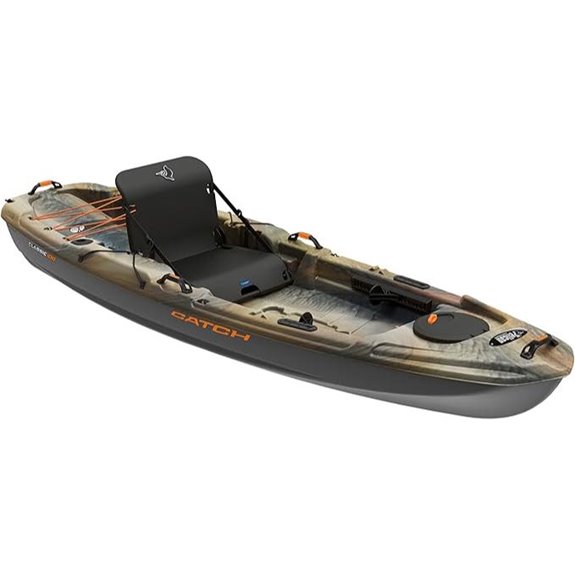
Pelican Catch Classic Angler
Why settle for a kayak that forces you to choose between stability and affordability? The Pelican Catch Classic Angler delivers both without compromise. This 120-inch sit-on-top features a tunnel hull design that keeps you secure and steady, whether you’re casting from a standing position or managing gear across its spacious deck.
The ERGOCAST CLASSIC dual-position seat adjusts between high and low positions, letting you customize comfort for extended fishing sessions. You’ll appreciate the quick-lock front hatch, rear tank well with bungee storage, and two flush-mount rod holders. At 57 pounds with a 350-pound capacity, it’s manageable to transport yet substantial enough for serious anglers.
Add the adjustable footrests and built-in bottle holder, and you’ve got a capable fishing platform that respects your budget.
- Weight Capacity:350 lbs
- Hull Material:High molecular weight polyethylene (HDPE)
- Rod Holders:2 flush-mount rod holders
- Length:10 ft (120 L)
- Weight:57 lbs
- Storage Compartments:Front quick-lock hatch, rear tank well with bungee cords
- Additional Feature:Dual-position ERGOCAST seat
- Additional Feature:Quick-lock front hatch
- Additional Feature:Ergonomic carrying handles
Modular Fishing Kayak with Cart and Paddle
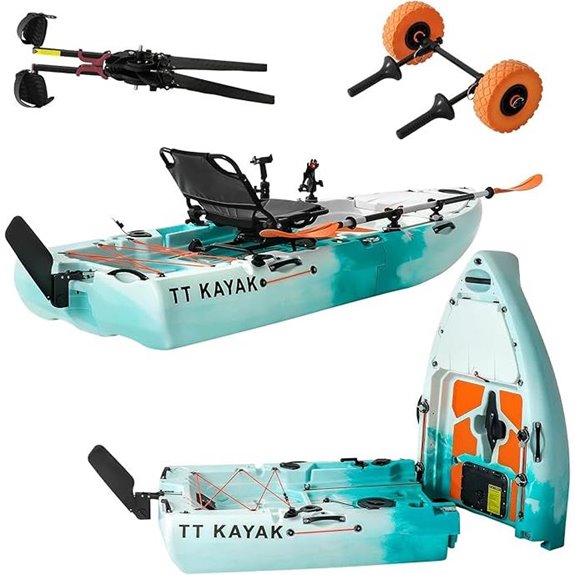
This two-piece design offers the most portable setup for anglers who haul their gear frequently. You get a complete package: the 110-inch kayak splits into manageable front and rear sections, a sturdy cart with foam tires that roll over sand and rocky shores, and an 87-inch aluminum paddle. The 38-inch-wide hull keeps you stable while tracking true across oceans, lakes, and rivers.
What really gets me is the storage system. You’ve got a front hatch for electronics and fish finders, a 2.1-gallon center livewell, and round waterproof compartments rated to different depths. Four quick-release mounts let you customize your setup without any hull modifications. At 573 pounds capacity with a swivel seat that rotates a full circle, you’re set for serious fishing comfort and versatility.
- Weight Capacity:573 lbs
- Hull Material:Low-Density Polyethylene (LDPE)
- Rod Holders:4 quick-release mounts (paddle holder, phone mount, fishing rod holder)
- Length:9.2 ft (110 total)
- Weight:86 lbs
- Storage Compartments:Front splash-proof hatch (10.5 L), center livewell (2.1 gal), round waterproof hatch, stern bungee cords
- Additional Feature:360° swivel seat rotation
- Additional Feature:Included kayak cart/paddle
- Additional Feature:Three-zone waterproof storage
Albott Modular Fishing Kayak with Drive System
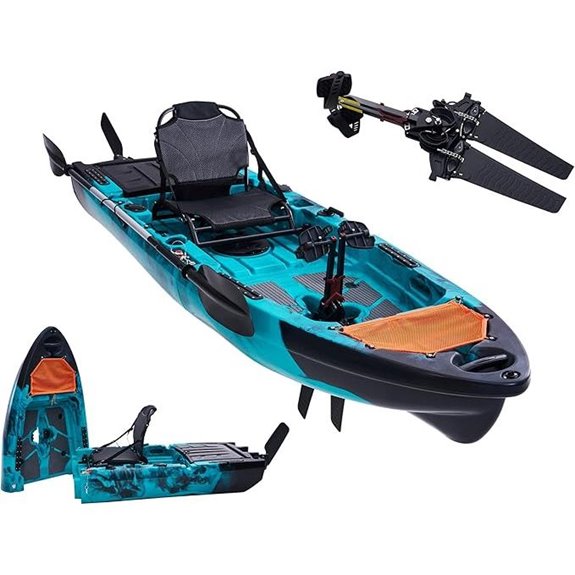
Want a fishing kayak that adapts to however you want to fish? The Albott Modular Fishing Kayak with Drive System delivers exactly that flexibility. Its 11-pound pedal fin system gives you hands-free propulsion that’s quiet and weed-resistant, perfect for stealthy approaches to shallow water.
The durable HDPE construction withstands tough conditions, and the modular design assembles in four quick steps. You’ll appreciate the 304 stainless steel rudder for smooth steering, spare fins included, and customizable configurations for solo or group adventures. At 102.4 pounds with a 420-pound capacity, this kayak handles serious fishing demands without sacrificing portability or versatility.
- Weight Capacity:420 lbs
- Hull Material:HDPE
- Rod Holders:Customizable with modular upgrades
- Length:9.4 ft (113.04 in)
- Weight:102.4 lbs
- Storage Compartments:Modular design with customizable storage areas
- Additional Feature:Pedal fin propulsion system
- Additional Feature:Quick four-step assembly
- Additional Feature:Stainless steel rudder system
Pelican Catch HDII Premium Fishing Kayak with HyDryve Pedal
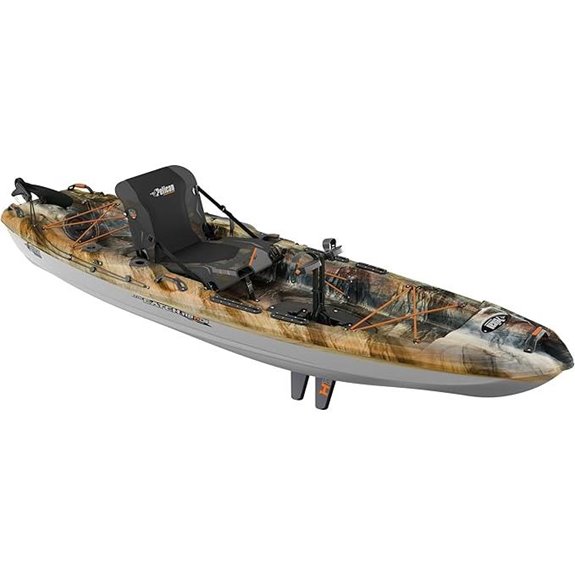
Looking for hands-free propulsion that actually works? The Pelican Catch HDII delivers with its HyDryve II pedal system, letting you maneuver shallow waters and dense vegetation without a paddle. I appreciate the thoughtful design: an Ergocast G2 seat keeps you comfortable during long sessions, while three flush-mount rod holders and four accessory rails let you customize your setup exactly how you want it.
At 67 pounds with a 350-pound capacity, it handles serious anglers and gear loads. The rudder with hand controls doubles as a skeg for tracking improvement. You’re getting a solid 1-person fishing platform backed by a lifetime limited warranty. At 126 inches long and 13 inches wide, it’s maneuverable without sacrificing stability.
- Weight Capacity:350 lbs
- Hull Material:Polyethylene (PE)
- Rod Holders:3 flush-mount rod holders
- Length:10.5 ft (126 H)
- Weight:67 lbs
- Storage Compartments:4 accessory rails for gear mounting
- Additional Feature:HyDryve II pedal system
- Additional Feature:Deployable rudder/skeg tracking
- Additional Feature:Ergocast G2 comfort seat
Factors to Consider When Choosing Kayak Fishing
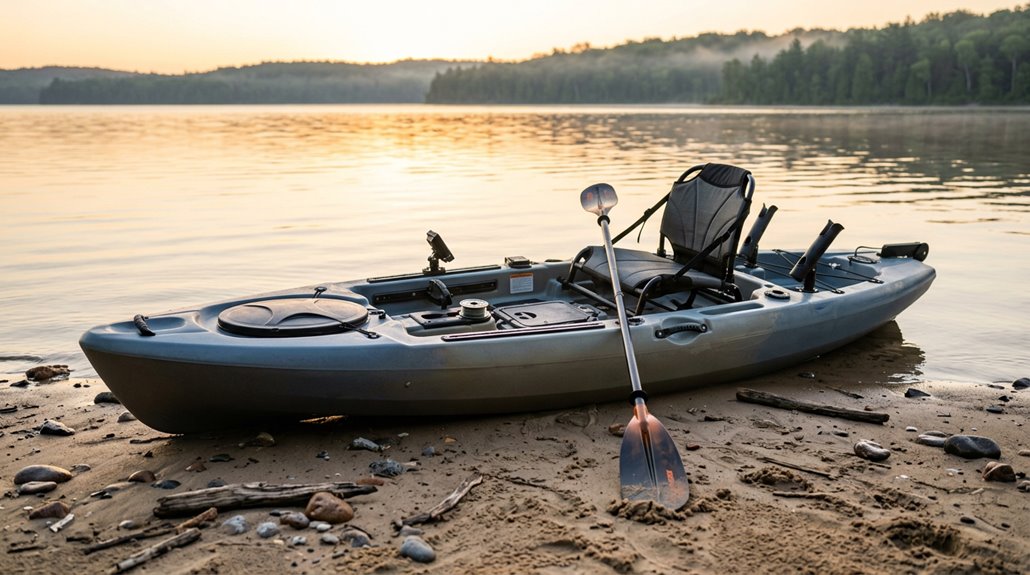
Now that you’ve seen what the Pelican Catch HDII brings to the table, I want to walk you through the key factors that’ll help you pick the right fishing kayak for your needs. You’ll want to weigh several important considerations: weight and portability (how easily you can transport it), storage and gear organization (where you’ll keep your tackle and equipment), stability and hull design (how steady it feels on the water), seating comfort and adjustability (whether you can fish for hours without pain), and weight capacity (making sure it handles you plus all your gear). Getting these factors straight before you buy means you won’t end up with a kayak that looks great in a magazine but leaves you frustrated on the water.
Weight And Portability
How much effort do you want to expend just getting your kayak to the water?
Weight matters more than you’d think. Lighter models like the Pelican Catch Mode 110 at 63–67 lb are genuinely easier to lift and carry solo, while heavier modular setups can push past 80 lb. That difference compounds across multiple trips.
Two-piece or modular designs reduce single-person lift strain by letting you load sections separately into your SUV or truck. And integrated accessories like rod holders, rails, and seats add weight beyond the hull itself, affecting portage effort.
Higher capacity ratings (350–420 lb) can actually shift how you maneuver a partially loaded kayak during transport. Pedal systems add heft too, though they distribute weight better and may ease front-end fatigue. Balance portability against the features you genuinely need.
Storage And Gear Organization
Once you’ve got your kayak to the water, keeping your tackle, electronics, and catch organized becomes just as important as the hull itself. I look for models with dedicated front and rear storage wells or hatches that let me access gear without rummaging around. Multiple compartments matter too, especially ones designed for specific purposes: livewells for bait, dry hatches for electronics, water-resistant spaces for valuables.
What really makes a difference is the rigging setup. Rod holders, mounting tracks, and tie-downs free up your deck space while keeping everything secured. I also appreciate under-seat storage and bungee cord areas for quick access to nets and small items. When these elements work together, you’re fishing efficiently rather than wrestling with clutter.
Stability And Hull Design
What separates a kayak you can confidently stand in from one that’ll have you white-knuckling the sides is fundamentally about hull design and how it interacts with your weight and movement. I’ve found that tunnel or flatter hulls provide that secure ride you’re after, especially when you’re casting.
Here’s what makes the difference:
- Wide hulls (38 inches or more) enhance lateral stability and reduce tipping risk during standing casts
- Keel or tracking-focused designs improve straight-line stability in chop, so you’re not constantly correcting your position
- Sit-on-top configurations with wide, flat decks give you room to move around gear safely
- Integrated flotation and rigid construction prevent sudden buoyancy shifts that could throw off your balance
These factors work together, creating platforms where you can focus on fishing instead of balance.
Seating Comfort And Adjustability
Your kayak’s stability means nothing if you’re hunched over in discomfort or can’t adjust your position to suit the fishing conditions you’re facing. I can’t stress enough how critical proper seating is for those long hours on the water.
Look for seats with adjustable height and back support systems like ERGOBOOST or ERGOCAST, which let you optimize your viewing angle and casting comfort. High-back or 360° swivel designs give you versatile movement and better gear access without sacrificing stability. And here’s the thing: padded EVA seat pads make extended sessions genuinely enjoyable while under-seat storage keeps your tackle organized.
Dual-position or multi-height options are game-changers. They let you switch between high and low seating depending on terrain and casting needs, reducing fatigue significantly and accommodating different body sizes.
Weight Capacity Considerations
How much can your kayak actually handle? I’m talking about the combined weight of you, your gear, and any ballast you’re carrying. You’ll find fishing kayaks ranging from about 350 to 573 pounds in capacity, and picking the right one makes all the difference.
Here’s what matters: exceeding that limit tanks your stability and tracking. Your kayak becomes tippy, and worse, you risk hull damage or capsizing. Before you load up those rods, tackle boxes, coolers, and electronics, do the math.
Add your body weight plus every piece of gear you’re bringing. Some modular designs offer higher capacities for versatility, but they require careful weight distribution across compartments. Match your total load to the kayak’s specs, and you’ll maintain that safety margin that keeps you paddling efficiently and confidently.
Propulsion And Pedal Systems
Once you’ve nailed down your weight capacity, it’s time to contemplate how you’ll actually move through the water. You’ve got two main paths: traditional paddling or pedal-driven propulsion.
Pedal systems like HyDryve II let you stay hands-free while maneuvering shallow waters and vegetation, which is huge for fishing. Most pedal kayaks include rudders or skegs that improve tracking and stability, giving you better control when you’re focused on casting rather than propulsion.
Here’s what makes pedals attractive:
- Frees up your hands for fishing
- Allows easier access to gear rails and rod holders
- Provides versatility when paired with traditional paddle options
Keep in mind that pedal fins add weight (around 11 lbs), affecting portability. Consider your fishing environment and whether hands-free propulsion justifies the added bulk.
Fishing-Specific Accessory Mounting
The best fishing kayak isn’t just stable and roomy, it’s rigged with purpose-built mounting systems that keep your tackle organized and your hands free for what matters: casting and reeling. I’d prioritize models featuring multiple rod holders, like two flush-mount options paired with 4 accessory rails, plus forward and rear storage tank wells with bungee platforms. These setups let you secure tackle boxes and pliers within arm’s reach without cluttering your deck.
Look for integrated mounting tracks, ideally 4 rigging tracks, that support customizable placements for fish finders, cameras, and electronics. Non-slip surfaces and traction pads are non-negotiable for stable standing during gear-adjusted movements.
Finally, verify ballast or flotation features maintain balance when you’re mounting heavy accessories on one side. That stability matters when you’re reaching for mounted gear mid-cast.
Durability And Material Quality
While those mounting systems keep your gear accessible and organized, what really determines whether your kayak withstands years of fishing abuse is what it’s made from and how well it’s built. Most fishing kayaks use high-density polyethylene (HDPE) or PE blends that balance impact resistance with light weight, perfect for rocky shorelines and shallow water. But if you’re serious about longevity, look for reinforced polymer composites like RAM-X found in premium models.
These deliver enhanced stiffness and durability against constant wear. Weight and capacity matter too: heavier models with higher capacities handle demanding loads and rough conditions better. And don’t overlook internal flotation plus ABYC compliance, which protect hull integrity. Finally, check for quality connections and stainless steel hardware on any modular components like pedal systems, preventing corrosion-related failures.